
Don't Forget the Lyrics
Music Games & Trivia Games & Trombone - LB ARTMusic
4.316.89K Reviews
- Version
- 2.0.2
- Installs
- 5.00M
- Age Rating
- Everyone
Screenshots
Our Review of Don't Forget the Lyrics
 Analysis by Appyee
I like music games best when they turn an ordinary pause into a reason to laugh, argue over a chorus, and find out who actually remembers the words. Don't Forget the Lyrics takes that simple idea and makes song recall the challenge. It is a free music-trivia game from Music Games & Trivia Games & Trombone - LB ART, rated for Everyone, and its appeal is easy to understand: you do not need musical training, just a willingness to trust your memory and risk being confidently wrong.
Its premise suits a quick round with family, friends, or a few minutes alone. The game asks you to recognize lyrics and complete the missing part, shifting familiar songs from background noise into something you have to actively remember. That small change is what gives the experience its party-game energy. I would approach it as light entertainment rather than a serious test of musical knowledge: the best moments come from the conversation around an answer, not from treating every round like an exam.
How a round works, and what to expect
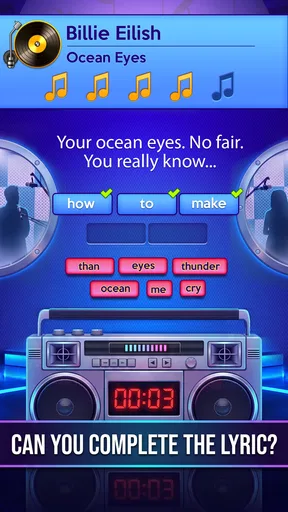
The basic loop is straightforward: listen to a song, notice where the words drop away, and try to supply what comes next. In practice, the challenge is often less about knowing the general meaning of a song and more about recalling the exact phrase at the right moment. A chorus you have sung for years can suddenly feel unfamiliar when you cannot lean on the next line already playing.
That makes the game a natural fit for an informal get-together. Imagine a family gathering where one person recognizes the track immediately, another knows the melody but not the verse, and someone else insists they have the right words. A round gives everyone a shared prompt without requiring anyone to prepare a playlist or learn rules in advance. It also works as a short solo distraction when you want something more interactive than scrolling, though the social payoff is stronger when people can compare guesses aloud.
The game is free to download, with optional in-app purchases listed from $0.99 to $99.99 per item. That range is worth keeping in mind before spending: I would first see whether the basic play pattern suits you and whether you expect to return to it regularly. If you are trying it for a single gathering, there is no need to make a purchase decision before you know how your group responds to the format.
Getting comfortable with the song challenge
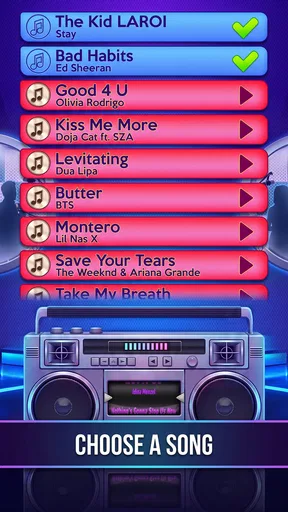
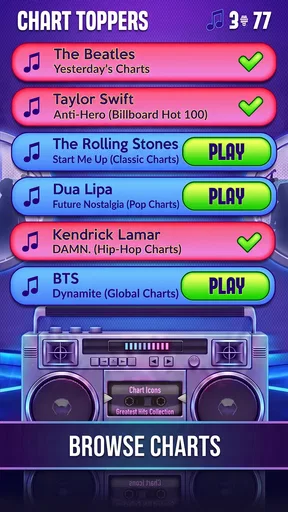
The moment you fire up Don't Forget the Lyrics, you’re greeted with an interface that's as vibrant as a pop concert. It’s intuitive, so you won’t need a user manual to get going. You just choose your genre – whether you’re into pop, rock, or even those golden oldies, there’s something for everyone. The app then throws you right into the action.
The game is simple in concept: you listen to a song, and at a crucial moment, the music stops, leaving you to fill in the blanks. It’s like karaoke, but with a twist. You think you know the lyrics to "Bohemian Rhapsody" after all those car sing-alongs? Well, let’s see if you can nail them when it counts!
For a fairer group round, I would agree on a few house rules before starting. Decide whether everyone answers at once or takes turns, and whether the group wants to accept a close wording or only the exact lyric. This is not about adding complicated structure; it prevents a familiar problem with music quizzes, where the loudest player can dominate or a friendly disagreement about one word takes longer than the round itself. Let the person who recognizes the song first wait a moment before answering, so quieter players have a chance to think.
Modes, company, and the social side
One of the coolest features is the variety of modes. There's a solo mode where you can challenge yourself at your own pace. But if you’re feeling competitive, the multiplayer mode lets you go head-to-head with friends or other players globally. It’s an adrenaline rush to see who can hold their own under pressure.
Solo play and playing with other people serve different moods. On your own, you can concentrate on recall without feeling watched, which is useful if you want to discover whether you really know a song beyond its chorus. With friends, the same gap between recognition and accurate recall becomes the entertainment. I would choose solo for a quiet break and multiplayer when the group is already in a playful mood; the latter is less appealing if everyone wants to listen passively or take turns at a slow pace.
For a casual game night, the most useful habit is to keep the round moving rather than turning every answer into a debate. Give players a moment to think, make a call, and move on. If a song sparks a longer discussion about who heard what, save that chat for between rounds. The game works best as a prompt for shared music memories, not as a strict competition that needs a formal scorekeeper.
What keeps it enjoyable—and where it can snag
Now, let’s talk about the fun factor. I’m not going to lie – there’s something hilariously humbling about realizing you’ve been singing the wrong lyrics to your favorite song for years. But that’s part of the charm! The game doesn’t just test your memory; it gives you a new appreciation for the songs you love.
And for those of us who might get a little stage fright, the app’s forgiving nature ensures it’s more about having a good time than perfect performance. You’ll find yourself laughing more often than not, especially when playing with friends who are just as clueless.
There is a useful distinction between recognizing a song and knowing its lyrics. Familiarity with the tune can make an answer feel obvious even when the missing words are not, so I would avoid assuming that a strong music fan will automatically win. Players with different listening habits can have an advantage on different tracks, which helps keep a mixed-age group involved. It is also a reason to treat wrong answers lightly: the surprise is part of the fun, rather than evidence that someone is not a real fan.
Compared with a standard music quiz built around artist names, release facts, or song titles, this format puts the emphasis on the words themselves. Compared with karaoke, it asks you to retrieve lyrics rather than simply follow along and sing. That makes it a nice middle ground for people who enjoy music but do not want to perform. If your group would rather sing complete tracks together, karaoke is the better choice; if you want broad trivia across music history, a conventional quiz will offer a different kind of challenge.
Practical limits and a smoother routine
While Don't Forget the Lyrics is a blast, there are a couple of areas that could use some fine-tuning. For instance, the ads can be a bit intrusive at times. They tend to pop up during the most inconvenient moments, which can disrupt the flow of the game.
Also, while the game does a great job of encompassing a wide range of music genres, some users might find the selection within each genre a bit limited. More diversity in song choices would be a fantastic update to keep users engaged longer.
Those interruptions matter most when you are trying to run a continuous group session. I would build in a natural pause after a round rather than promising everyone an uninterrupted chain of questions; it gives the group a chance to talk and makes an ad break less jarring if one appears. For a quick solo session, the same interruption may be a minor annoyance. This is a practical trade-off: the game is easier to recommend as a casual, stop-and-start activity than as a tightly paced event where every delay would frustrate the players.
Song choice also affects how well a group connects with the game. Genre variety is welcome, but broad categories do not guarantee that every person will know every track. In a mixed group, avoid treating a missed lyric as a test of general music knowledge: someone may simply listen to different styles. If your friends have very specific tastes, a playlist-based guessing game may suit them better because you can choose the material yourselves. Here, the benefit is that the challenge is ready to play; the trade-off is having less control over whether each selection is familiar to everyone.
It is also worth setting expectations about purchases before handing a phone around. Because optional items span a wide price range, I would keep spending decisions with the person who owns the device rather than letting a group tap through prompts casually. The game is free to start, so trying the core experience first is the sensible approach. That is especially true for parents sharing a device with children, even though the game’s Everyone rating makes its general audience broad.
Who should play, and who may prefer something else
I think the strongest audience is a group that enjoys familiar songs, friendly competition, and a little harmless embarrassment. It can be a good choice for relatives with different levels of gaming experience because the central task is immediately understandable. A music fan who likes testing memory may also enjoy solo rounds, especially when they want a brief activity rather than a long session. The game’s rating of 4.3 from around 76,000 ratings, alongside more than 5 million installs, suggests that many people have found this kind of lightweight music challenge appealing.
I would steer away from it if you want a deep music-learning tool, a carefully curated trivia course, or complete control over the tracks used. It is also not ideal for a group that dislikes interruptions or gets frustrated when a lyric answer is disputed. Those players may be happier with a playlist they make themselves, a traditional question-and-answer quiz, or karaoke. The right choice depends on whether you want to recall words under a little pressure or simply enjoy listening and singing.
For anyone checking compatibility, the current version is 1.9.0 and the stated minimum operating system is 7.0. I would check that the device meets that requirement before planning a group session around it. The game first appeared on September 28, 2012, and is made by Music Games & Trivia Games & Trombone - LB ART. Those details make it a long-running entry in the music-game space, though what matters day to day is whether its simple lyric challenge and song selection suit your crowd.
My verdict after a few rounds
Overall, Don't Forget the Lyrics is a delightful way to put your musical memory to the test. It’s perfect for parties, solo jams, or just killing time with something other than mindless scrolling. With its engaging gameplay and wide appeal, it’s easy to see why music lovers are hooked.
If you’re ready to see if you truly know the lyrics or if you’ve just been singing nonsense for years, give this app a try. Just don’t forget to turn the volume down if you’re in public – you might not want everyone to hear your lyrical blunders!
My practical recommendation is to start with a short session, try both the solo and social styles that appeal to you, and see whether the song choices feel familiar enough to keep you engaged. If you are hosting, explain the rules simply, keep answers light, and leave room for the stories a song brings back. That approach plays to the game’s strengths without asking it to be a full-featured music library or a perfectly uninterrupted quiz night.
Privacy and Permissions
See what permissions an app requests and how it handles your data.
- Wi-Fi connection information
- view Wi-Fi connections
- Other
- view network connections, full network access, control vibration, prevent device from sleeping, Google Play license check, read Google service configuration
Verdict
Strengths of Don't Forget the Lyrics
- Engaging music challenges enhance fun.
- Wide variety of songs across genres.
- Intuitive interface for easy navigation.
- Multiplayer mode for competitive play.
- Regular updates with new songs.
Limitations of Don't Forget the Lyrics
- Requires stable internet connection.
- Limited free content without subscription.
- In-app ads can disrupt gameplay.
- Some songs may not be updated.
- Occasional app crashes reported.
Similar Picks in This Category
View All
Tiles Hop Music & Ball Game
AMANOTES PTE. LTD.4.3

Magic Tiles 3™ - Piano Game
AMANOTES PTE. LTD.4.6

Real Piano
Bilkon3.7

Piano Game: Classic Music Song
Dream Tiles Piano Game Studio4.0

Smash Colors: Music Ball Rush
BADSNOWBALL HONGKONG LIMITED4.2

Piano Music Go-EDM Piano Games
Joy Journey Music Games4.5
Frequently Asked Questions
What is the main objective of Don't Forget the Lyrics?
Don't Forget the Lyrics is a music trivia game where players are challenged to complete song lyrics. The main objective is to test your lyrical knowledge by filling in missing words from popular songs across different genres and decades. It's both a fun and educational way to enjoy music.
How is the gameplay structured in Don't Forget the Lyrics?
The gameplay involves listening to a snippet of a song, after which the music stops, and players must correctly fill in the missing lyrics. Points are awarded based on accuracy and speed. As you advance, the difficulty increases, offering a more challenging experience to music enthusiasts.
Does Don't Forget the Lyrics offer multiplayer options?
Yes, Don't Forget the Lyrics features both single-player and multiplayer modes. In multiplayer, you can compete against friends or random opponents online. This feature adds a competitive edge, allowing you to show off your lyrical prowess against others in real-time matches.
Are there in-app purchases in Don't Forget the Lyrics?
Yes, the app includes in-app purchases. Players can buy hints or additional song packs to enhance their experience. While the game is free to download, these purchases allow users to unlock more content or gain an advantage if they find certain levels challenging.
What devices are compatible with Don't Forget the Lyrics?
Don't Forget the Lyrics is available for both Android and iOS devices. It requires a stable internet connection for downloading song packs and accessing multiplayer features. Ensure your device meets the app’s system requirements for optimal performance and enjoyment.
Play our best games!


